London · Fontainebleau
Serve Randomiser
In build · 2026 · weighted dice and a court-listening wristband for real tennis serves
What it does
Real tennis rewards an unpredictable serve, and research on professional tennis shows players switch serves far too often when they try to be random. This project outsources the choice. Six 3D printed twelve sided dice call the serve with weights matched to my strengths, and the next version removes the dice entirely: an iPhone in my court bag listens for the gap between points and buzzes a rhythm code to a capsule hidden in my sweatband. A fault reroutes to a second serve profile, and if the machine goes quiet I simply serve my own choice, so it can only ever add randomness.
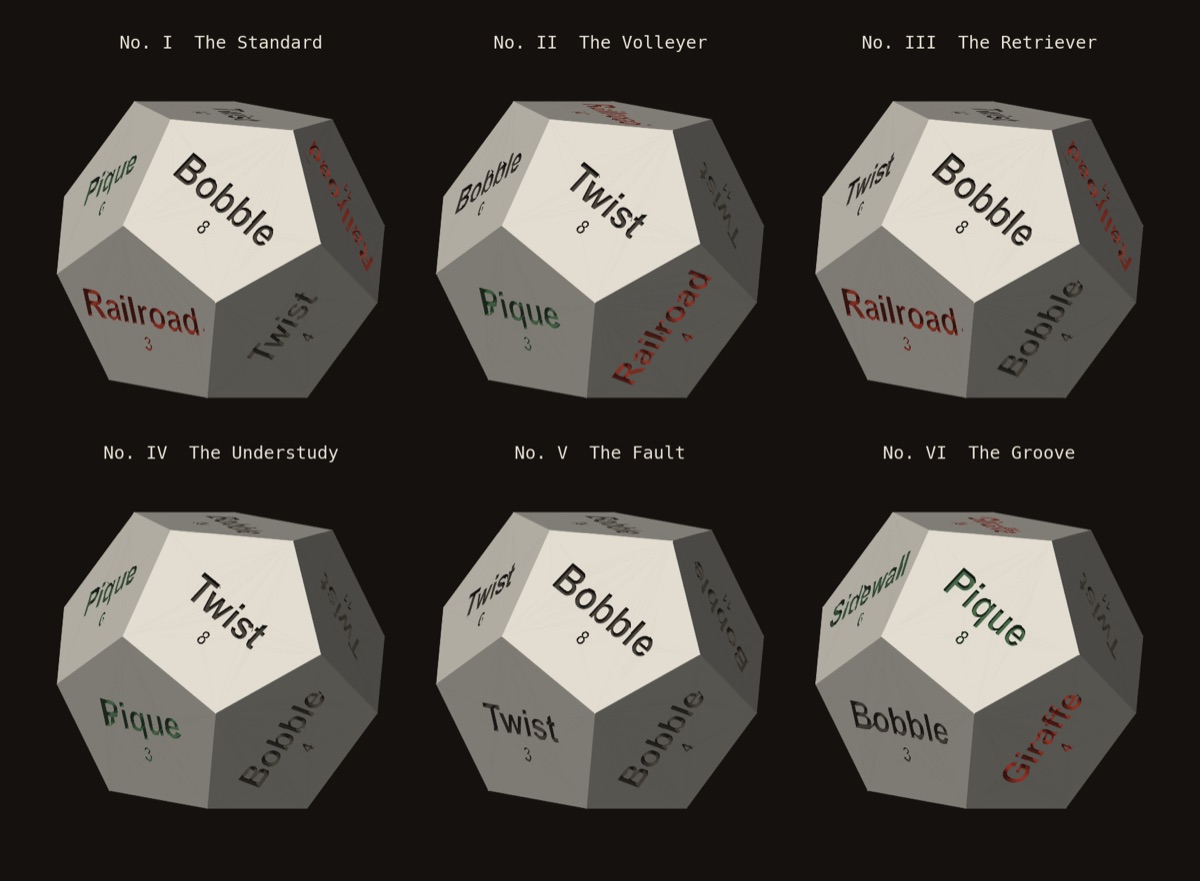
Why I built it
Walker and Wooders studied Wimbledon finals and found that even the best players in the world alternate their serves more often than true randomness allows, and later work across more than 140,000 professional serves confirmed the bias. As an amateur with five serves and a habit of trusting instinct, the fix seemed obvious: pre-commit to a weighted random draw and obey it. The dice were the cheap test of whether I would actually follow orders. The wearable is the version an opponent cannot see.
Where it stands
The dice are printed and on their way. The wearable went through four rounds of multi model research, a hostile red team review and an approved build plan of 28 gated task cards, with three validation gates that must pass before any hardware is bought. An overnight autonomous build session has already landed the audio detection pipeline and its test instruments. The next gate is the honest one: proving the listening works on a recording of a real club game.
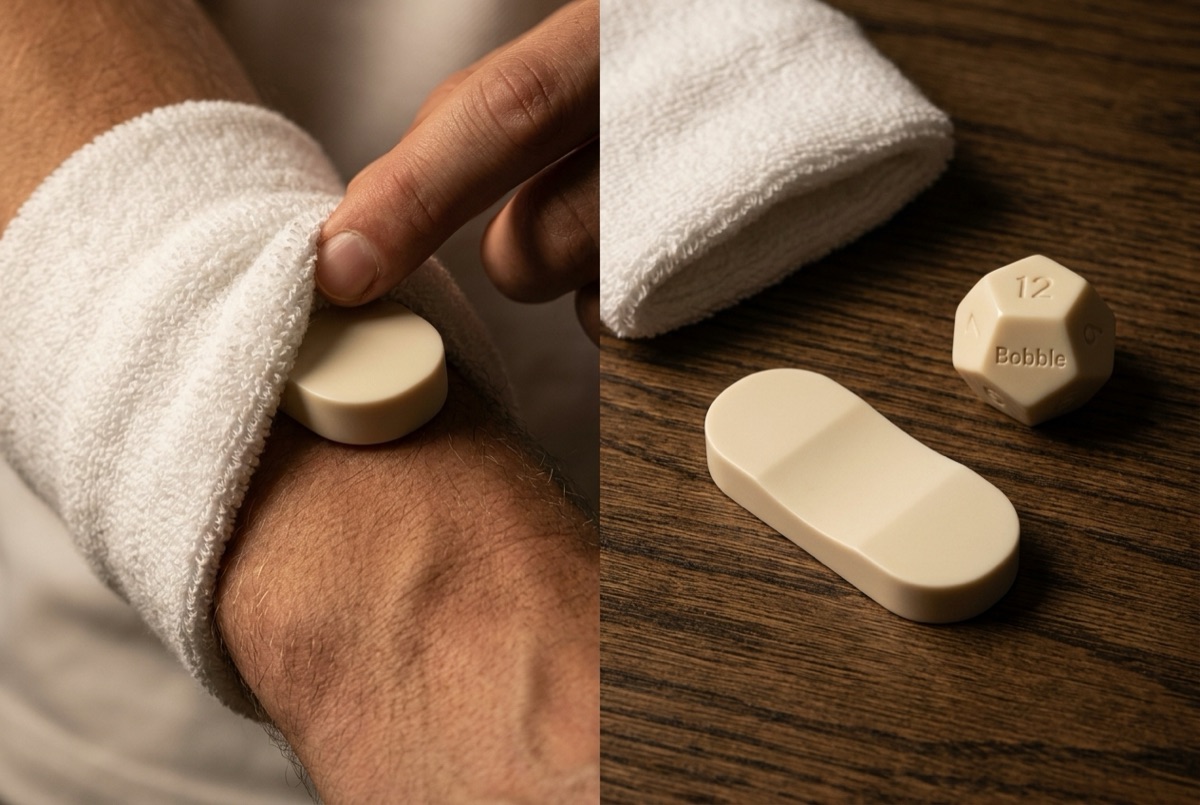
Weighted twelve-sided dice that pick your next serve, generated in Python and resin-printed. The dice are built; an iPhone-and-wristband version that listens for the point and buzzes the next serve is in development.
Stack Python CAD, 3D printing; iOS and ESP32/BLE wearable in development